In the wake of the Civil War, Black people throughout the South founded autonomous communities, often on flood-prone land, in hopes of escaping white supremacy.
Today many of those freetowns are gone.
And the ones that are left are fighting for their survival.
In Turkey Creek, Patrick White points out community advocates from his church. Slowing encroachment has required a multigenerational effort.
On Google Earth, Turkey Creek, Mississippi, is easy to miss: two splashes of green squished inside North Gulfport’s beige city grid. With US Route 49 to the west, Gulfport-Biloxi international airport to the south, and an international shipping channel to the east, the historic Black community is hemmed in. Airport storage, apartment complexes, warehouses and industrial sites – including a toxic Superfund site– have taken hefty bites out of the formerly rural community. But the land in and around Turkey Creek hasn’t always been coveted.
“Snake infested, mosquito infested, and not on high ground” is how Derrick Evans, the great-great-grandson of Sam Evans, one of Turkey Creek’s founders, imagines the land in 1866, when four newly emancipated couples purchased eight 40-acre plots of swampland from the Arkansas Lumber Company. “It was a wilderness with nothing there, but wetlands and swamps and Black people. And because it was the least desirable land, it was the most affordable.”
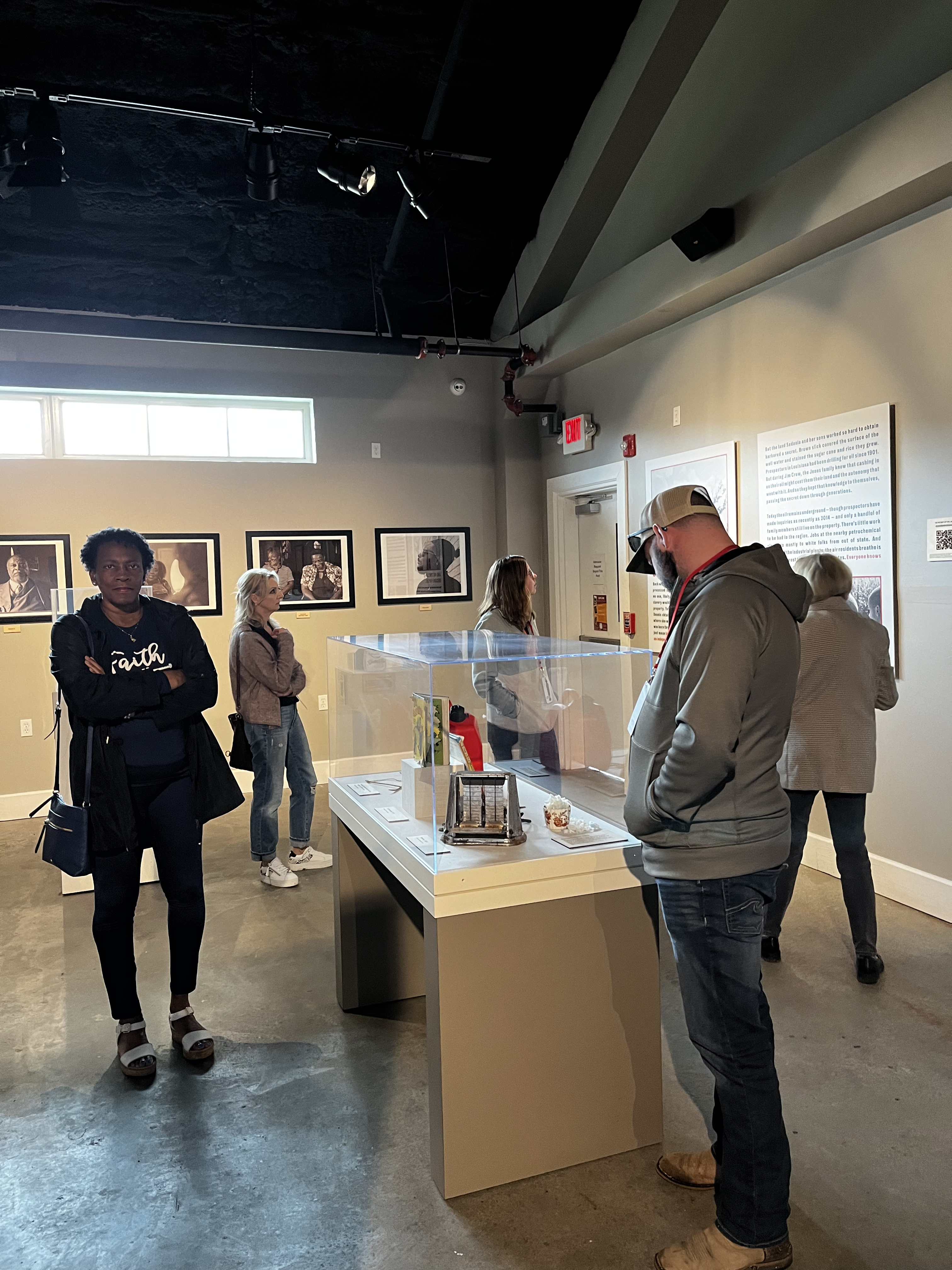
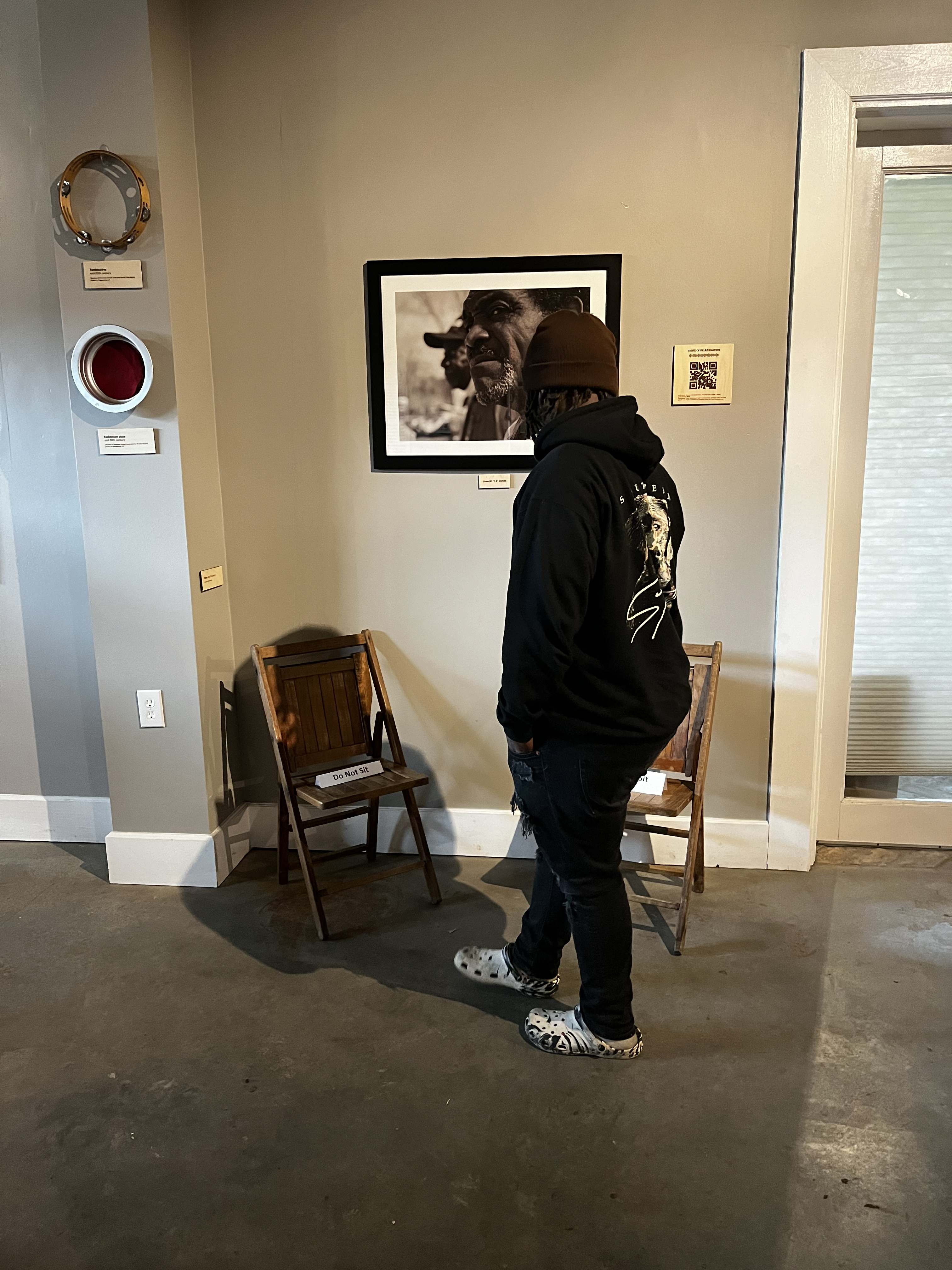
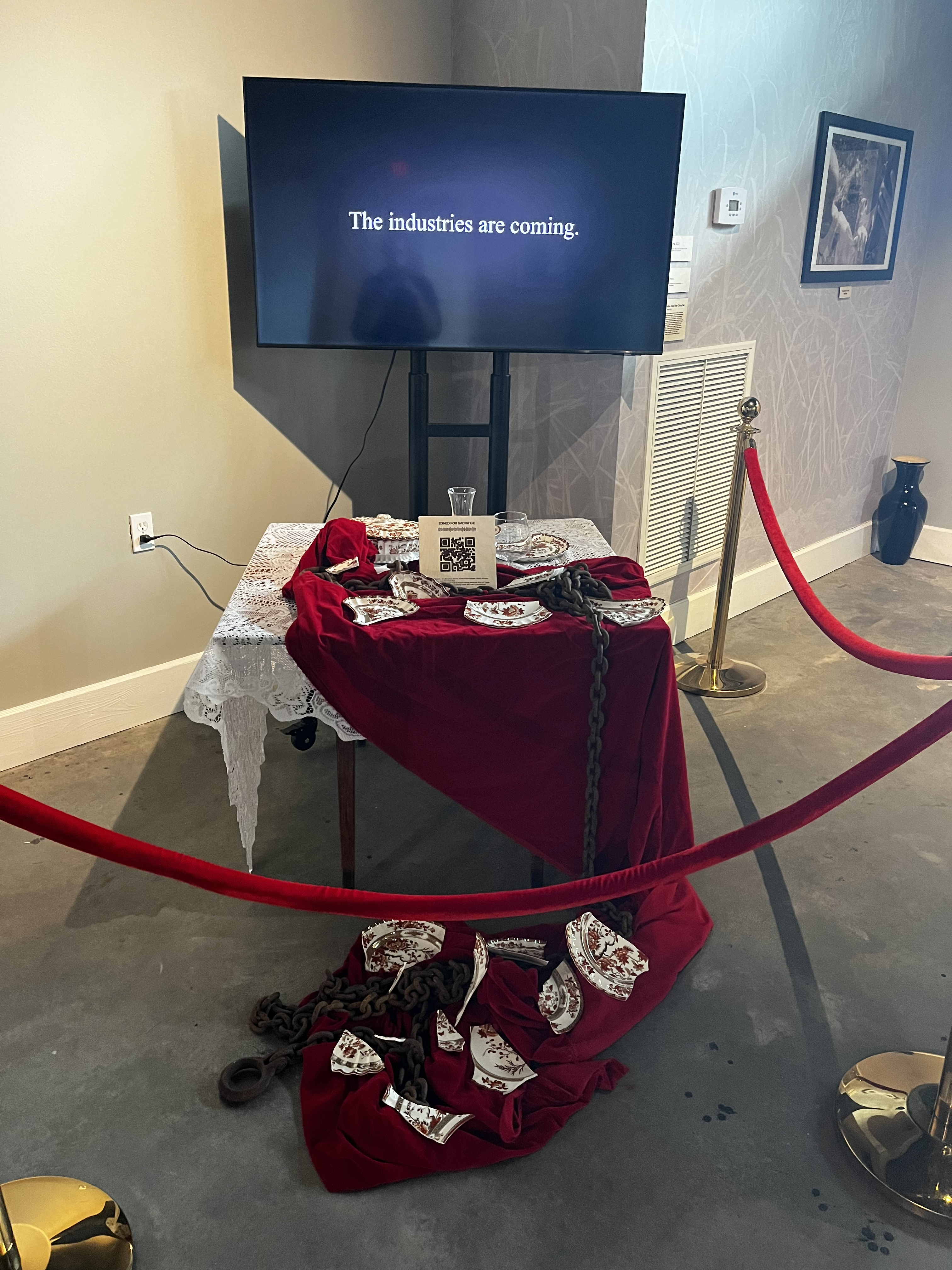
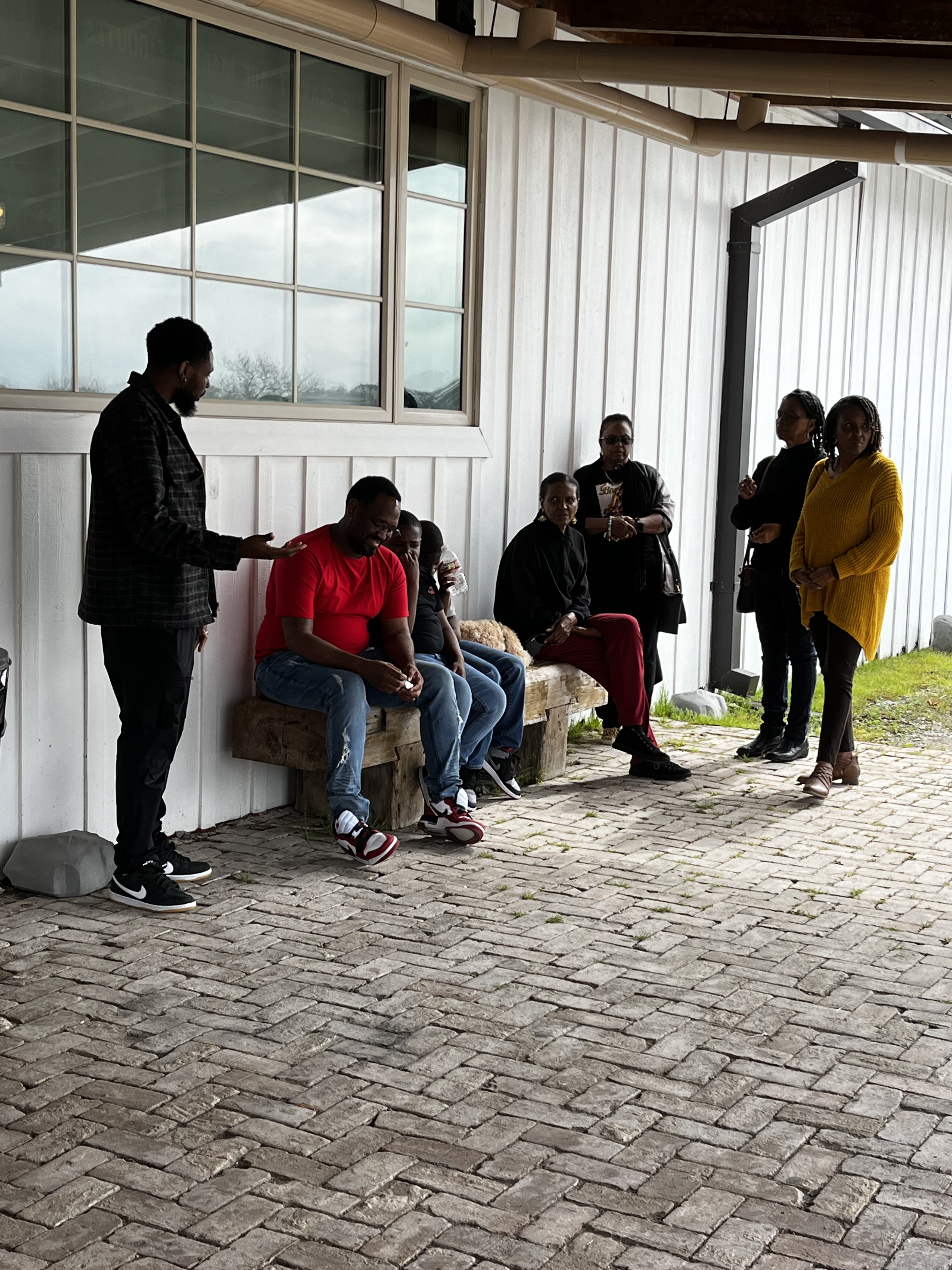
Extractivism opened today at the Whitney Plantation where it’ll be up through October. Having it there, at one of the only plantation museums focused on the lives of enslaved people, is something Jazzy and I dreamed about since we put the exhibit together last year. Artist talk / documentary screening on May 4.
Here’s a link to an online exhibit if you’re unable to make the exhibit.
“The year my twin and I turned eight, we vowed to kill our neighbor’s cat. Buster was an enormous marmalade and, a couple times a week, he left the heads of decapitated songbirds in our front yard. He belonged to the girl across the street, Liza Parker. Liza was in our grade but not our class. She wore button-up dresses every day and had her mother drive her to school each morning because she thought the bus was too dirty. When we saw her outside, she’d turn around and go inside; or if Buster was there, she’d bend over and pet him and whisper “Dirty orphans” in a singsong voice we could hear from our side of the street.”
from “Buster,” Winner of the 2014 Meridian Editor’s Prize and cited in Best American Short Stories 2015.
*
“Each June, sisters slink up from the swamp. Spanish moss clings to their arms. Uprooted blueberry bushes drag in their wake, zigzagging black sand. The butch ones drape water moccasins around their necks like bowties, but most wear nothing. Mud clumps on their hair and skin. They lurch forward, bone thin and hungry, picking the pine needles from their teeth and ears. This year I am twelve, and I’ve brought my lasso. I’m determined to be an only child no longer.”
from “Where Sisters Come From,” Gigantic.
*
“Lake Sherando was a tea-colored pond with a wooden structure, like a hangman’s platform, rising from its center. On the stairs in its center, children pinched each other and butt in line. At the top of the tower, they jumped, flailing their arms and shrieking before splashing into the tannic murk. Tiny waves lapped at the caramel sand and a bloated brown tampon floated near the shore.”
This past year I had the opportunity to join an extraordinary team from across America to try something I’d always wanted to do. Make a podcast! Over the course of a year, our team produced a ten-part miniseries called Plot of Land. A project of the Philly-based non-profit Monument Lab, Plot of Land explores how land ownership and housing in the United States have been shaped by the entrenched interplay of power, public memory, and privatization. I couldn’t be prouder of stories we tell. Fingers crossed for season 2!
(Links below for episodes I reported and/or produced.)
Have you ever seen billboards on the highway offering cash for houses? Has a stranger called you offering money for your home sight unseen? In Plot of Land’s second episode, we wade into the world of housing speculation, considering how private equity markets and real estate investment trusts have transformed the places we literally call home. How did housing become such a profitable market? And so volatile that it could lead to the largest financial crisis since the Great Depression?
We attend the 61st annual Boley Rodeo in Oklahoma. Once the largest and wealthiest Black town in Oklahoma, Boley was founded by Creek Freedmen and African Americans escaping Jim Crow violence and disenfranchisement. We meet the Bradford family, whose G-Line ranch is indicative of the broader struggle of Black farmers and ranchers in Oklahoma and across the country.
We’re back in Boley, at the Bradford family ranch. At one point Oklahoma had 50 Black townships and 1.5 million acres of Black-owned farmland. Today only 13 Black towns survive and the majority of Black farmers have retired or lost their land, discouraged–and broke–from an industry plagued by racist lending practices. What can Boley’s rise and more recent decline teach us about how biased policies have shaped who gets to own what land?
We learn the incredible story of Sedonia Dennis, a woman once enslaved in Louisiana, who came to own a piece of the plantation that had once claimed ownership of her family. And we explore how, over time, the plantation economy gave way to the petrochemical industry. Join us as we spend time with Sedonia Dennis’s descendant, Jazzy Miller who is documenting her family’s fight to exist at the intersection of each of these forms of extraction.
We return to Louisiana and the Joneses, where in recent decades family members have moved away for work and to escape the increasingly toxic air and water leaking from the neighboring chemical plants of Cancer Alley. As stronger hurricanes and vanishing wetlands reconfigure Louisiana and new industries threaten to repeat old patterns, what will this mean for the future of Jonesland? What can their story on the front-lines of climate change teach us as the nation faces the dire consequences of extractive economies?
Concluding the Plot of Land series, we look at the work being done across the United States to repair our relationship with the land, from the Tongva conservancy in Los Angeles to the Sea Islands of South Carolina. What will it take to imagine a radically different future? With the stakes rising along with the temperature, what is the scale of change we need to shift power and build a more just world?
My essay,“The Louisiana Chemical Plants Thriving Off of Slavery,” looks at the links between the plantation economy and the petrochemical industry in south Louisiana, arguing that “it’s not by chance that 158 years after the signing of the Emancipation Proclamation, rural Black communities bear the environmental consequences of Louisiana’s biggest industry.” I’m delighted that it’s included inThe Atlantic’s InheritanceSeries, a project about Black life, American History, and the Resilience of Memory. I encourage you to read the whole series.
When I decided to write about my friend Catherine, I made a rule for myself: I would only write what felt honest. For creative nonfiction, honesty might be a given, but discovering my own emotional truth and then replicating it in language was hard work. In the wake of Catherine’s death, a suicide, my emotions ricocheted. I was furious one minute, bereaved the next, and profoundly grateful in the moments when I was able to consider the entirety of our decades-long friendship. When she died, I was six months pregnant with my first child. That juxtaposition—creating a child while losing a childhood friend—created an intense emotional whiplash. I wanted the form of my essay to recreate those collisions. A year earlier I’d drafted a much shorter essay about a car crash Catherine and I survived as teenagers, and revisiting it, I realized that Catherine died nineteen years, to the day, after that crash. The symbolism was uncanny. Rather than structuring my thoughts along a neat narrative arc, I decided to use jumpy transitions and zigzag through time in a way that would, hopefully, disorient and even jostle the reader. Though I’ve found some resolution in the years since, I hope my essay reflects the upheaval of that period.
In other good news, A Studio in the Woods awarded me an Inaugural Writers Residencyin their beautiful new Writers Cabin. I’ll be going there for a week in February. I’m honored because the award was given in thanks for my “contributions and dedication to the New Orleans literary community.”
I’m delighted to have “The Solitary Garden,” a profile of prison abolitionist and artist jackie sumell, featured in the Autumn Issue of Orion Magazine.
For more than twelve years, Jesse Wilson has eaten, slept, read, showered, dreamed, and shat in a seven-by-twelve-foot room. His sink sits on top of his toilet. His bed is a concrete slab. His four-inch-wide window is angled so that a slice of sky is all he sees of the world outside. For every twenty-three hours inside this room, he may, or may not, get an hour away— time alone in a workout room so drab inmates nicknamed it “the empty swimming pool.” “Day and night bleed into one long sigh,” he writes in a letter from his cell in ADX Florence, a supermax prison designed to house our nation’s most dangerous prisoners. The complex is located in Colorado, though for Jesse’s purposes it might as well be on the dark side of the moon. “This place is one of extreme soul-crushing blankness. Nothing is alive that’s normal. No grass, no weeds, no trees. Just concrete and red brick walls.”







 ANYA GRONER