Impactful stories about the intersections of environment and equity.

For the Love of Cats and Dogs
64 Parishes
Dogs were stuck in crates, chained up in yards, and stranded atop bookshelves and roofs. Cats cowered in cabinets, box springs, and crawl spaces. “I could knock on the side of a building and hear barking coming from so many different areas,” remembered Garrison. “It was such a painful thought—animals [that] made it through the hurricane are going to die of starvation and dehydration.”

They’re fighting polluters destroying historically Black towns – starting with their own
The Guardian
Underutilized. Depressed. Blighted. Overgrown. Empty. In planning documents, those words appear often describing Black-owned land. That language, said Purifoy, “makes it easy for folks, especially white folks … to characterize space as underdeveloped and out of use.”
Southlands
Nearly everything about the incident was an aberration. Unlike most apex predators, black bears are timid animals, more apt to run away or climb a tree than approach a human. Those woofs and clicks are yawns that signal unease are the ursine equivalent of “using their words.” Such behaviors, called bluster, are meant to scare off trouble, not amplify it. If they happen at all, assaults are brief—swats or smacks followed by a swift retreat. Persistent violence is almost unheard of.
Guernica
The spill became a slow-motion death sentence. For 87 days, crude oil erupted from the bottom of the sea, and attempts to close it, divert it, and cap it failed.

SPACE TOURISM IN MODERN STORYTELLING
Electric Lit
In the sight-seeing poster for planet Keplar-16b, a traveler in a space suit stands silhouetted before a purple and rose-colored desert. Craggy mountains rim the horizon. Orange and white orbs illuminate a yellow sky. “The land of two suns,” the poster explains, “where your shadow always has company.”

THE PREGNANCY TEST AS PLOT DEVICE
The Atlantic
As a plot device, the pregnancy test provides endless opportunities for misinformation and dramatic comedy.

The Atlantic
“New Orleans is the only ship I’d go down with,” my friend Ben wrote on Facebook in the hours before Hurricane Ida upended southeast Louisiana. He rode out the storm in the city—“hunkering down,” in standard hurricane parlance.
Oppression runs deep in southern Louisiana, but so does resistance. On January 8, 1811, a group of enslaved people marched from Woodlawn Plantation in St. John the Baptist Parish toward New Orleans. With each plantation they passed, more people joined, armed with cane knives, hoes, clubs, and guns, until more than 500 people flowed downriver, bent on founding a new Black nation.
BETWEEN WORLDS
Orion Magazine
THE SUN is nearing the horizon when Joey Dardar’s boat propeller starts churning up mud. For a moment, the smell of sulfur is so thick I can taste it, but Joey’s not worried. He knows this area too well for us to run aground. Yellow-crowned night herons glide overhead. “Gros-bec,” Joey calls them. French for crooked beak. To our right is Isle de Jean Charles. To our left, the Gulf of Mexico. Directly ahead, the biggest backhoe I’ve ever seen is parked beside an oil well.
THE SOLITARY GARDEN
Orion Magazine
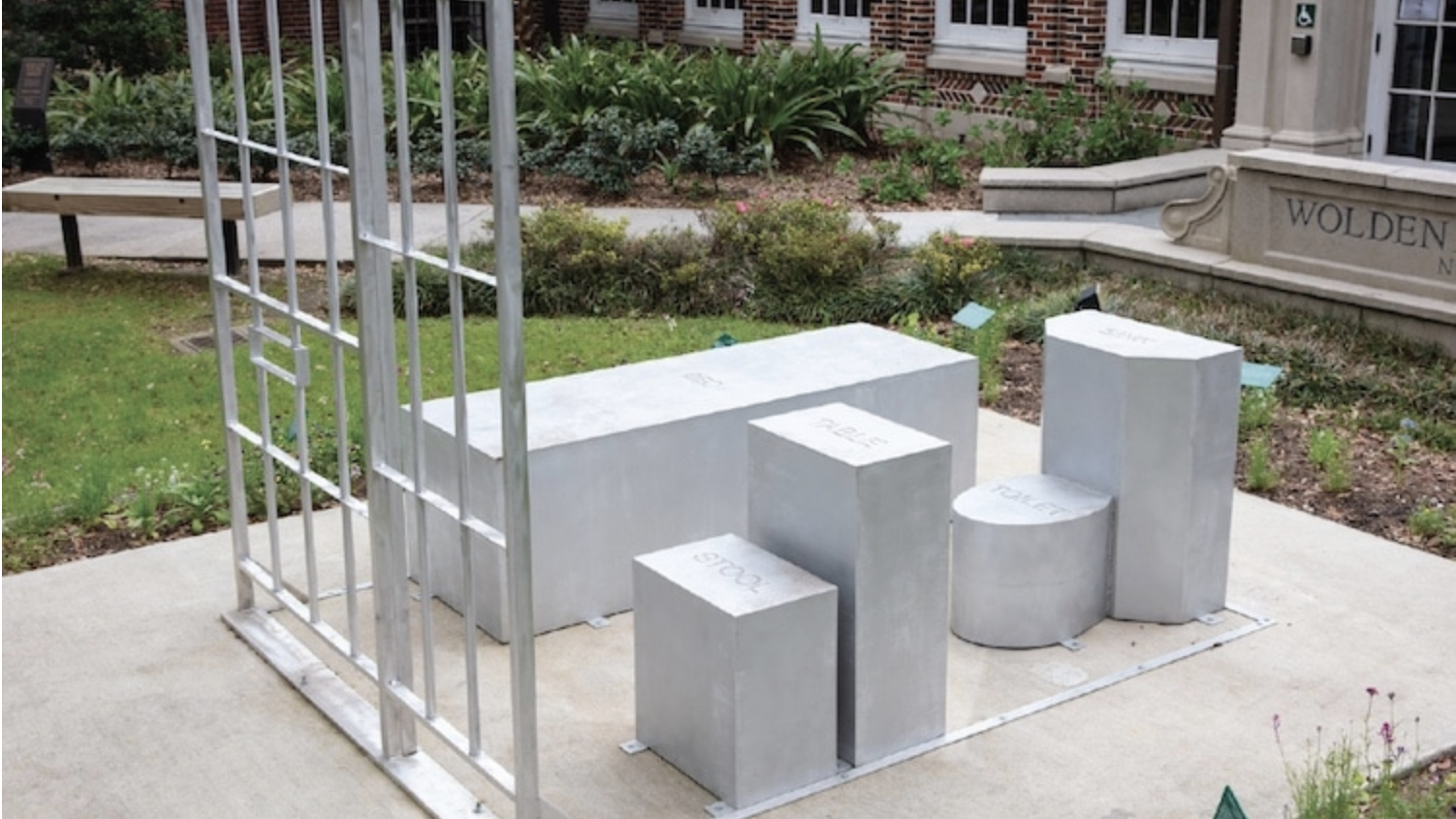
For more than twelve years, Jesse Wilson has eaten, slept, read, showered, dreamed, and shat in a seven-by-twelve-foot room. His sink sits on top of his toilet. His bed is a concrete slab. His four-inch-wide window is angled so that a slice of sky is all he sees of the world outside. For every twenty-three hours inside this room, he may, or may not, get an hour away— time alone in a workout room so drab inmates nicknamed it “the empty swimming pool.”

THE POLITICS OF DRINKING WATER
Longreads
In a society that values “self-actualization,” the discovery of one’s “true self,” identical twins are something of a cultural snag, a contradiction to the way we think selfhood works. It’s not that twins aren’t individuals. Of course, we are. But popular culture portrays twins as exactly the same, souls assembled from the same base parts according to the same DNA blueprint. In contrast, individuality is about uniqueness, a quality that identical siblings aren’t always granted.

THE PUBLIC IS US
Guernica
Mallon was forcibly removed to Riverside Hospital, on North Brother Island in the East River, where she lived in isolation from 1907-1910. In 1909 she sued the health department for holding her unfairly. “I am an innocent human being,” she argued. “I have committed no crime and I am treated like an outcast—a criminal. It is unjust, outrageous, uncivilized.”
Thank you so so much for your beautiful work on this story. It’s really one of my faves. Tremendous job. Wld love to work together again.
-Lauren Williams, Editor at The Atlantic
 ANYA GRONER