Spring News!

I’m thrilled to have poem in the new issue of one of my favorite journals, Ecotone. This volume is themed around SOUND! The poem, titled “The Ecology of Falling Whales” is the longest I’ve ever written–a whopping 5 pages–and it’s all about visiting my sister, Maya, at  Friday Harbor Labs in Washington State, where I observed her and other biologists study aquatic life. You can buy the journal and read an excerpt here.

Ecotone-20-unboxed.jpg

**

I also wrote about sunlight for The Atlantic in honor of daylight savings. Read the whole thing here.

The frustration of lost sleep gives way to the luminous pleasure of a lengthening day. Sunlight extends past dinnertime. Dog walkers, soccer players, and children in playgrounds bask in a later twilight. Though humans organize our schedules around the clock, Daylight Savings reminds us that our lives, like our planet, revolve around the sun.

**

The lovely Anna Currey interviewed me about sisters, the environment, and writing across genre.

I don’t want to teach anything I don’t believe in. It’s important to talk about making writing entertaining, which is obvious, but doesn’t gets much air time in academic settings. Any piece of writing is competing for a reader’s attention span. It has to be more interesting than someone’s cell phone or television. Entertainment is something I talk about with my students, and something I think about in my own writing. We have to work hard for our readers.

**

41D7x+FB+GL._SX321_BO1,204,203,200_.jpg

Here’s an excerpt from an interview I did with Chris Schaberg about his newest book The End of Airports. Read the whole thing at Terrain.Org.

It’s a common response that “everything changed” after 9/11. But having worked at the airport during—and through—that time, my overwhelming feeling was that things hadn’t changed at all. It’s just that people suddenly had a scapegoat for all the things they wanted to do, say, and enact around air travel. Racism especially: this became so ridiculously easy after 9/11. But it was already there, in the airport, of course. If the airport is postmodern, it is for the ways it struggles with and against Ezra Pound’s modernist mandate, “Make it new!” On the one hand, airports want you (the traveler) to feel the verve of the new. On the other hand, airports want you to feel—and to perpetuate—all the old comforts of the same, on and on and on.

 

Five Stories About Espionage

Em Perper's avatarLongreads

The life of a spy is supposed to be glamorous. James Bond, right? Fancy cars, hot women, top-of-the line technology, and a signature drink. I went looking for those stories this week, then remembered James Bond isn’t, you know, real. There are no standoffs on the top of moving trains, and Dame Judi Dench does not run a secret government agency, unfortunately. The reality of espionage is still exciting, but it’s more complicated. The good guys and bad guys are not so easily differentiated. Today’s spying relies on social media, surveillance, coercion and ambition.

View original post 310 more words

Words of Encouragement and Despair

Writing requires tremendous perseverance. Everyone’s ability to read grows faster than their ability to write, which means that we’re almost always better critics than creators, a dynamic that can be frustrating. A lot of writers I know work hard and are unhappy with the results. I think discouragement is part of the process, and it’s actually a good sign. If you’re feeling disappointed by your writing, it means that you’re capable of getting better, that you can see the gap between what you’re currently able to write and what you hope to write.

Big Week: Part II

When it comes to publishing, this week has been huge! Last Thursday, I had two essays go up. At VIDA, I wrote about my experience leading writing workshops when students write about triggering material–sexual assault and domestic violence. My essay, “Is there a Doctor in the Marriage?” was posted on the NYTimes Modern Love page the very same day.

And there’s more news!

16735998022_b847c02d48_z.jpg

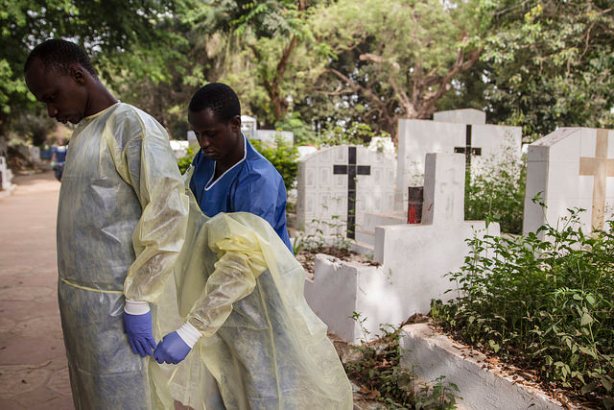
In a new essay titled “The Public Is Us,” I wrote about the conflict between disease control and civil liberties at Guernica. Here’s an excerpt:

“By virtue of having bodies,” Eula Biss points out in her recent book On Immunity, humans are “dangerous.” Taking care of infectious individuals can be as much about limiting public risk as it as about recovery. When Barack Obama asked Congress for six million dollars to treat Ebola patients in November 2014, he emphasized the potential risk to Americans, rather than the current risk to West Africans. “Over the longer term,” he said, “my administration recognizes that the best way to prevent additional cases at home will be to contain and eliminate the epidemic at its source in Africa.”

I also have an essay in the brand new anthology, A Manner of Being: Writers On Their Mentors.  The anthology includes essays by 67 writers, including George Saunders, Tobias Wolff, Tayari Jones, Henry Rollins, and Christine Schutt!

5128XpypF6L._SX312_BO1,204,203,200_.jpg

Publishers Weekly says:

In this inspiring anthology, 67 writers discuss the effect mentorship had—or didn’t have—on their work and lives. Parker explains in his introduction that he initially started looking for contributions in 2011, hoping to make sense of his experience studying under Arthur Flowers and George Saunders for his M.F.A. Saunders and Flowers are both included, writing about what they gained from their relationships with Douglas Unger and Tobias Wolff (Saunders’s mentors) and with John O. Killens (Flowers’s). Four writers discuss not having a mentor, whether due to missed opportunities or, in Paisley Rekdal’s case, by her own choice. Rekdal’s essay is one of the best, detailing the disappointment she felt overhearing professors and writers she admired dismissing minority writers as beneficiaries of white liberal guilt, and wondering whether similar comments had been made about her. Many writers describe a sense of family and even love, as in Henry Rollins’s piece about Hubert Selby Jr., and admiration and awe are present throughout. What the writers share of their mentors, and what their mentors shared with them, makes for a fascinating work on writing and the student-teacher relationship. (Dec.)

Most of the time writing requires intense solitude. It’s really fun to have a week like this where that solitude breaks and I can share the work I’ve writing in the big green armchair in my living room.


Love, Love, Modern Love

I have two new essays that went live today. Below are excerpts and links to each one.

6MODERNLOVE-master675.jpg

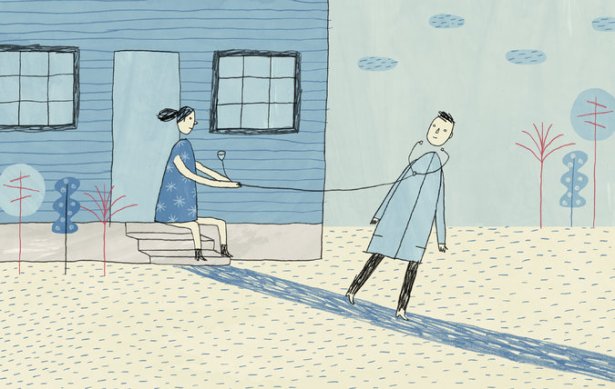
“Is there a Doctor in the Marriage?” is in this week’s Modern Love column in the NYTimes!!!

I gazed out the window. For years, marriage had seemed as distant and inscrutable to me as the green-and-brown patchwork below. It was, I had thought, the kind of tame choice that signals a loss of momentum and spontaneity.

I had felt giddy about love but ambivalent about becoming a wife. The word itself seemed like an erasure, privileging domesticity over desire, association over achievement. In marriage, I had seen women lose their names, their ambition.

By the time I met my husband, my critique of marriage had already begun to soften. I was almost 30, and the adventures of single life were losing their appeal. Here was a man who made gumbo from scratch, met me for runs after work, helped me train for my first half-marathon, watched my dog when I was away and surprised me with yogurt pie (a family recipe I mentioned in passing) when I was feeling down.

34124fe5-9120-41a9-857c-30f0a9c18c3d.jpg

The second essay, titled “Gone from My Heart: Violence and Anger in the Poetry Workshop,”  is up at VIDA: Women in the Literary Arts, one of my very favorite literary organizations.

Through poetry, my students have raged against exes, bad drivers, literary criticism, and oboe players. Once, a student wrote a sonnet about her dislike for Tom Cruise:Each perfectly placed hair, / I want to glue in the opposite direction.

A subset uses this assignment to document violence. They write about violence they’ve seen and violence they’ve felt, sexual and domestic violence—the kinds of gendered violence that are typically silenced. Often, these students—nearly always women—tell me they’re writing from their lives.

I don’t believe in avoiding difficult topics, not in the classroom. Still, I can be a worst-case-scenario-thinker, and, when students share work that makes them particularly vulnerable, I fret. So much can erupt in a classroom. Someone might challenge the validity of an experience. The writer could get defensive. Fellow classmates could get offensive. The conversation might trigger a panic attack. A class isn’t a single organism—it’s fifteen or twenty or, even, thirty distinct human beings. Classroom control is crucial. It’s also an illusion.


The Pregnancy Test as Plot Device

Here’s a clip from a mini essay I wrote for The Atlantic: 

“Though pregnancy is a timeless source of narrative conflict, pregnancy tests on the screen are relatively new. Over-the-counter, take-home indicators didn’t hit the shelves until 1988. Before that, aside from obvious symptoms—missed periods and morning sickness—early verification was harder to come by. The 1927 A-Z test (named for inventors Selmar Aschheim and Bernhard Zondak) involved injecting a woman’s urine into an immature mouse or rat. If the rodent went into heat, the woman was “in the family way.” In frogs and rabbits, the same procedure incited ovulation. While frog eggs are expelled from the body and easily visible, injected rabbits had to be cut open and inspected, a practice that gave rise to the euphemism “the rabbit died.”

Check out the whole thing here!

Mixed Taste: Tag Team Lectures on Unrelated Subjects

IMG_0573

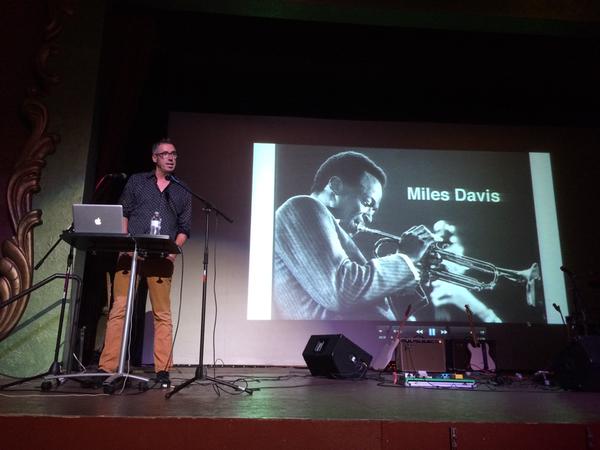
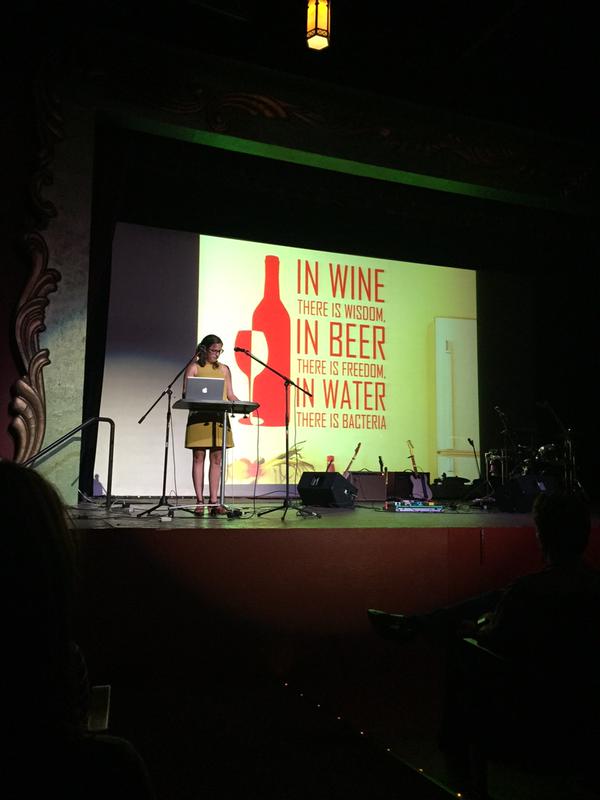
If I was asked the ideal situation in which to give a public lecture, I still wouldn’t have come up with anything nearly as fun as the Denver Museum of Contemporary Art’s Mixed Taste lecture series. I lectured on drinking water and Scott Kinnamon lectured on Miles Davis. Then, during the Q & A, the audience came up with questions that tied the two subjects together. The whole premise of the program is based on the idea of metaphor, that unrelated subjects can illuminate one another. During dinner, afterwards, I found out that the late poet, Jake Adam York, whose work I admire tremendously, helped found the series eleven years ago. I guess it shouldn’t be a surprise that a brilliant poet would be behind such a brilliant event.

Here are some photos:

IMG_0575

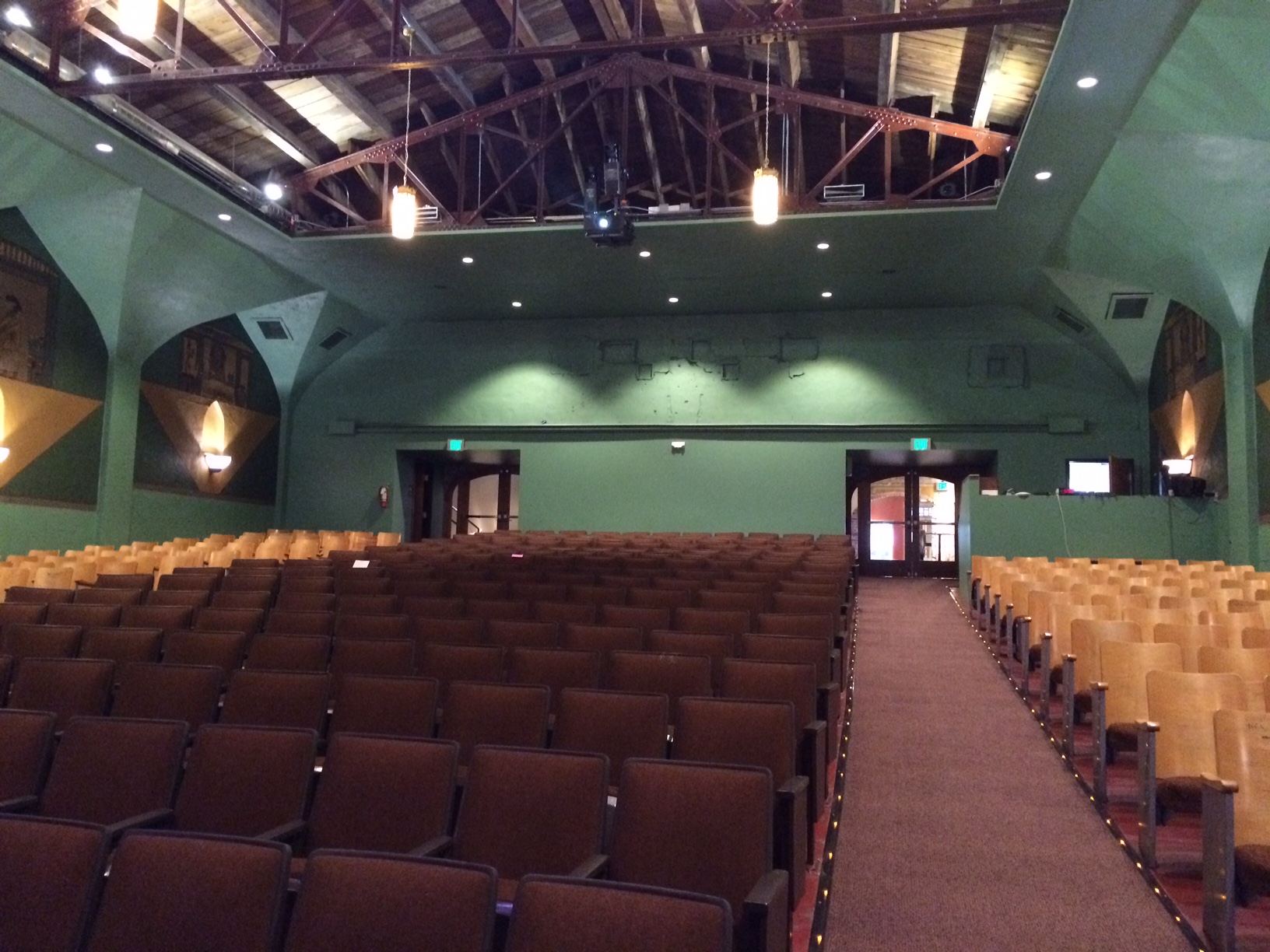
The Holiday Event Center just before the doors opened. Tickets were sold out!

CJg8XxmUkAAb7gg

The house band, Oko Tygra, wrote a song about drinking water during the lecture and played it at the intermission.

CJhQGcrUMAAx438

Scott Kinnamon called Miles Davis “the avatar for cultural malaise.”

CJhDvW5UsAAa--j

Before chlorination, beer and wine were often safer to drink than water!

Greetings From My Inner Werebat

Miracle Monacle, a journal run by the University of Louisville,  published two of the stranger poems I’ve ever written. Here’s the first one, titled, “Greetings From My Inner Werebat.” Click here to read “Dreams of Babies.”

GREETINGS FROM MY INNER WEREBAT 


Is there a word more terrifying 
than housewife? More shameful 

than panties? Is premeditation 
a good idea? I don’t regret 

my tramp stamp, though, 
I sometimes reflect on hairdos 

I have known and wonder 
what I shall title my memoir.